Brake Fluid DOT 4 or DOT 5.1: Differences and How to Choose
Why brake fluid is so important
Brake fluid is one of the most critical components for vehicle safety. Its job is to transmit the force you apply to the pedal to the callipers, which press the pads against the discs. If the fluid loses effectiveness, braking becomes long, spongy or in the worst case ineffective. That's why all manufacturers recommend replacing brake fluid every 2 years, regardless of kilometres driven.
Why the fluid deteriorates over time
Brake fluid is hygroscopic: it slowly absorbs moisture from the air through the system seals. When the water percentage exceeds 3%, the boiling point drops drastically. The result: during prolonged braking (descents, motorway queues, sports use) the heat generated by callipers can boil the fluid, creating vapour bubbles that make the pedal spongy and lengthen braking distances.
DOT 4: the standard for the vast majority of vehicles
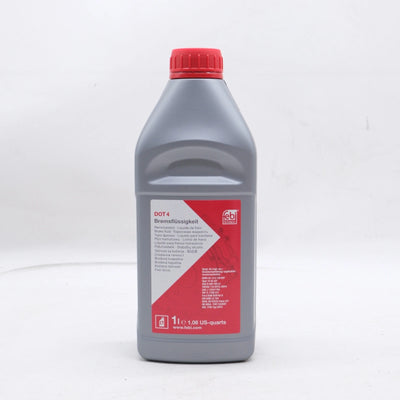
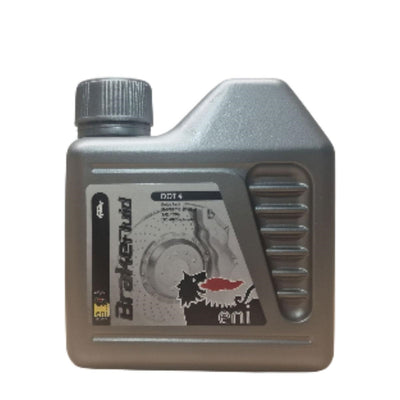
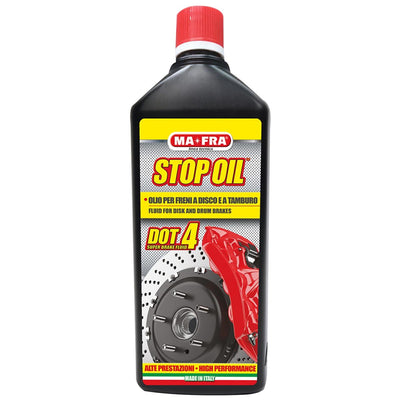
The DOT 4 specification defines a glycol-based fluid with a dry boiling point of at least 230°C and wet boiling point of at least 155°C. It is compatible with the vast majority of modern cars with ABS, ESP and traditional hydraulic systems. PowerTec DOT 4 ABS and Antiskid 1L and febi bilstein products are reliable choices in this category.
DOT 5.1: the superior level
The DOT 5.1 specification is an evolved formula still glycol-based, with a dry boiling point of at least 260°C. Indicated for: high-performance vehicles, sports use or track days, cars with particularly stressed braking systems (mountains, towing), high-displacement motorcycles. The difference is felt under thermal stress.
Warning: don't confuse DOT 5.1 with DOT 5
DOT 5 (without the dot-one) is a completely different fluid, silicone-based, NOT hygroscopic, used mainly on military vehicles and some American customs. Never mix glycol fluids (DOT 3, 4, 5.1) with DOT 5 silicone: it causes serious damage to the system.
How to replace brake fluid
Replacement requires a complete system bleed. Correct procedure: 1) Vehicle level, engine cold; 2) Open the fluid reservoir and aspirate the exhausted fluid; 3) Fill with new fluid of correct specification; 4) Bleed starting from the wheel furthest from the reservoir (usually rear right), then rear left, front right, front left; 5) For each wheel: open the bleed nipple, press the pedal fully, close the nipple before releasing, repeat until only clean new fluid comes out; 6) Check level at reservoir.
Conclusions
For 95% of cars, a good DOT 4 is the correct choice — PowerTec DOT 4 or febi bilstein DOT 4 available on LS Motors cover virtually all modern vehicles. If you have a sports car, drive many descents or seek maximum performance, consider DOT 5.1. Remember: replace every 2 years, always. Shipping 24/48h.